I spent three weeks trying to wake up at 6 a.m. On Day 22, I slept through my alarm, hit snooze four times, and felt like a complete failure. Because everyone says it takes 21 days to build a habit, right? Three weeks and you're golden. Automatic. Transformed.
Except that's not true. Not even close. And that lie kept me stuck for years.
If you've ever white-knuckled your way through 21 days of a new behavior only to watch it fall apart on Day 23, you're not broken. You were just working with bad data. Let me show you what the actual research says, why it matters, and what to do about it.

Consistency compounds - my habit tracker after 66 days of daily tracking
The 21-Day Myth: Where It Came From and Why It Won't Die
The "21 days to form a habit" idea traces back to a plastic surgeon named Dr. Maxwell Maltz. In 1960, he published Psycho-Cybernetics, a self-help book that became a massive bestseller. In it, Maltz observed that his patients took a minimum of about 21 days to adjust to their new appearance after surgery. He also noticed it took him roughly 21 days to form a new habit himself.
Here's the critical part everyone missed: Maltz wrote "a minimum of about 21 days." Minimum. He never claimed 21 days was the finish line. He was describing a starting point. But the nuance got stripped away as the idea bounced from one self-help book to another, from one motivational speaker to the next. "At least 21 days" became "exactly 21 days" became "just 21 days."
It's a perfect example of how a reasonable observation turns into a viral myth. The number is small enough to feel achievable. It's specific enough to sound scientific. And it's completely, demonstrably wrong as a universal rule.
What the Science Actually Says: 66 Days (Give or Take a Lot)
In 2009, Phillippa Lally and her research team at University College London published a study in the European Journal of Social Psychology that finally put real numbers to this question. They tracked 96 participants over 12 weeks as each person chose a new eating, drinking, or activity behavior to perform daily.
The researchers measured how automatic the behavior felt over time. Not just whether people did it, but whether it felt effortless, whether they did it without thinking, whether skipping it felt wrong.
The findings were striking. On average, it took 66 days for a behavior to become automatic. But here's what makes this study so valuable: the range was enormous. Some participants locked in their habit in just 18 days. Others needed 254 days. That's over eight months.
What drove the difference? Complexity mattered. Drinking a glass of water after breakfast became automatic much faster than doing 50 sit-ups before dinner. The people, the behaviors, the contexts were all different, and so the timelines were all different.
Lally's study also revealed something reassuring: missing a single day didn't destroy the habit-building process. Participants who missed one opportunity didn't show significantly different automaticity curves compared to those with perfect streaks. One slip doesn't reset the clock. That's huge, because the 21-day myth creates this all-or-nothing pressure where a single missed day feels catastrophic.
The Takeaway from the Data
There's no magic number. Your habit might take 3 weeks or 8 months. But 66 days is a solid, research-backed average to plan around. And knowing the real range helps you set expectations that won't sabotage you when Day 22 rolls around and the behavior still feels like work.
Why 30 Days Is the Ideal Starting Commitment
So if the average is 66 days and the range goes up to 254, why do I keep coming back to 30-day challenges? Because 30 days sits in a psychological sweet spot that the raw numbers don't capture.
Here's how I think about it:
- 30 days is long enough to see real results. You won't reach full automaticity, but you'll start feeling the momentum. After 30 days of daily writing, I wasn't on autopilot yet, but I'd written over 15,000 words. That's tangible. That's motivating.
- 30 days is short enough to commit to honestly. Telling yourself "I'll do this for 66 days" feels abstract. "I'll do this for 30 days" feels like a container you can hold in your head. You can see the end from the beginning.
- 30 days gets you past the hardest part. Lally's data showed the steepest increases in automaticity happen in the first 30-40 days. The curve flattens after that. So your first month is where you get the most return on effort.
- 30 days builds identity. After 30 consecutive days of meditating, you stop being "someone trying to meditate" and start becoming "someone who meditates." That identity shift, as James Clear writes about in Atomic Habits, is what carries the behavior forward.
The 30-day frame isn't the whole journey. It's the launchpad. You commit to 30 days with full focus, and then you decide whether to extend. Most of the time, you will, because by Day 30 the behavior has enough roots that stopping feels stranger than continuing.
I've written more about this approach in The PixMixy Method: 30 Days to Transform Your Daily Routine, where I break down exactly how to structure your first challenge.
How to Track Your Streak (and Why It Matters More Than You Think)
There's a story about Jerry Seinfeld that every productivity writer loves to tell. A young comedian asked Seinfeld for advice on how to get better at writing jokes. Seinfeld told him to buy a big wall calendar and a red marker. Every day he wrote new material, he'd put a big red X on that day. After a few days, you have a chain. "Your only job," Seinfeld said, "is to not break the chain."
Whether Seinfeld actually said this is debatable (he's denied it in interviews). But the method works, and there's psychology behind it. It taps into what researchers call the "endowed progress effect." Once you've built up a streak, the streak itself becomes a motivator. You don't want to lose what you've accumulated. You're not just building a habit anymore; you're protecting an investment.
Here's what I've found works best for tracking:
1. Pick One Method and Stick With It
Some people love apps. Some people love paper. Both work. What doesn't work is switching between three different tracking systems in the first two weeks. I started with a physical journal (the Clever Fox tracker I recommend below), then moved to a simple app after my first 30 days. Choose one and commit.
2. Track at the Same Time Every Day
I check off my habits every night at 9 p.m. It's become its own micro-ritual. If you track randomly throughout the day, the tracking itself never becomes automatic, and you'll eventually forget and lose your data.
3. Make the Streak Visible
This is the Seinfeld insight. A completed checkbox in an app that you never open is invisible. A wall calendar with 23 red X's in a row is something you see every time you walk into the room. Put your tracker where you can't ignore it.
4. Plan for the Missed Day
Remember Lally's finding: one miss doesn't reset your progress. But two in a row starts to erode the pattern. My rule is simple: never miss twice. If I skip a day, the next day is non-negotiable. No excuses, no renegotiation.
The Habit Curve: What Each Phase Feels Like
Understanding what you'll experience at each stage makes the process less disorienting. Based on the research and my own experience running dozens of 30-day challenges, here's the rough emotional arc:
Days 1-7: The Honeymoon. Everything feels fresh and exciting. You're motivated. You tell your friends about your new thing. This is easy. You wonder why everyone doesn't do this.
Days 8-14: The Resistance. The novelty wears off. You start negotiating with yourself. "Maybe just today I'll skip it." "I'll do double tomorrow." This is where most people quit. You're past the excitement but nowhere near automaticity.
Days 15-30: The Grind. It's not exciting anymore, but it's not agonizing either. It just is. You do it because you said you would. Some days you feel nothing. Other days you notice small improvements that keep you going. This is where character gets built.
Days 31-66: The Shift. Gradually, almost imperceptibly, the effort decreases. You find yourself doing the behavior before you've consciously decided to. One morning you realize you went for your run without any internal debate. That's automaticity starting to take hold.
Days 67+: The New Normal. The behavior feels like part of who you are. Skipping it would feel weirder than doing it. You've crossed the threshold. You still might need occasional maintenance, but the heavy lifting is done.
What Makes Some Habits Form Faster Than Others
Not all habits are created equal. Lally's research and subsequent studies point to a few factors that influence speed:
- Simplicity. "Drink a glass of water with lunch" becomes automatic much faster than "do a 45-minute workout." If your habit feels like it's taking forever, try shrinking it.
- Consistency of context. Habits form faster when they're tied to a specific time, place, and preceding action. "After I pour my morning coffee, I'll write for 10 minutes" beats "I'll write at some point today."
- Emotional reward. Behaviors that produce immediate positive feelings stick faster. If your habit feels punishing every single time, you might need to redesign it so there's something enjoyable in the process, not just the outcome.
- Frequency. Daily habits form faster than three-times-a-week habits. The more repetitions, the deeper the neural pathway.
Tools That Made the Difference for Me
Over the past two years of running 30-day challenges, two tools have genuinely impacted my success rate. I'm not listing everything I've ever tried, just the things I keep coming back to.
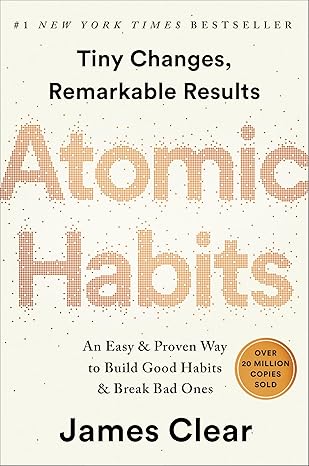
Atomic Habits by James Clear
The book that changed how I think about habits. Clear's framework of making habits obvious, attractive, easy,
$16.99
Check Price on Amazon →I read Atomic Habits after my third failed attempt at building a morning routine. Clear's concept of "habit stacking," where you attach a new behavior to an existing one, was the unlock for me. Instead of trying to overhaul my entire morning, I stacked one new habit onto my existing coffee routine. That single change made everything downstream possible.
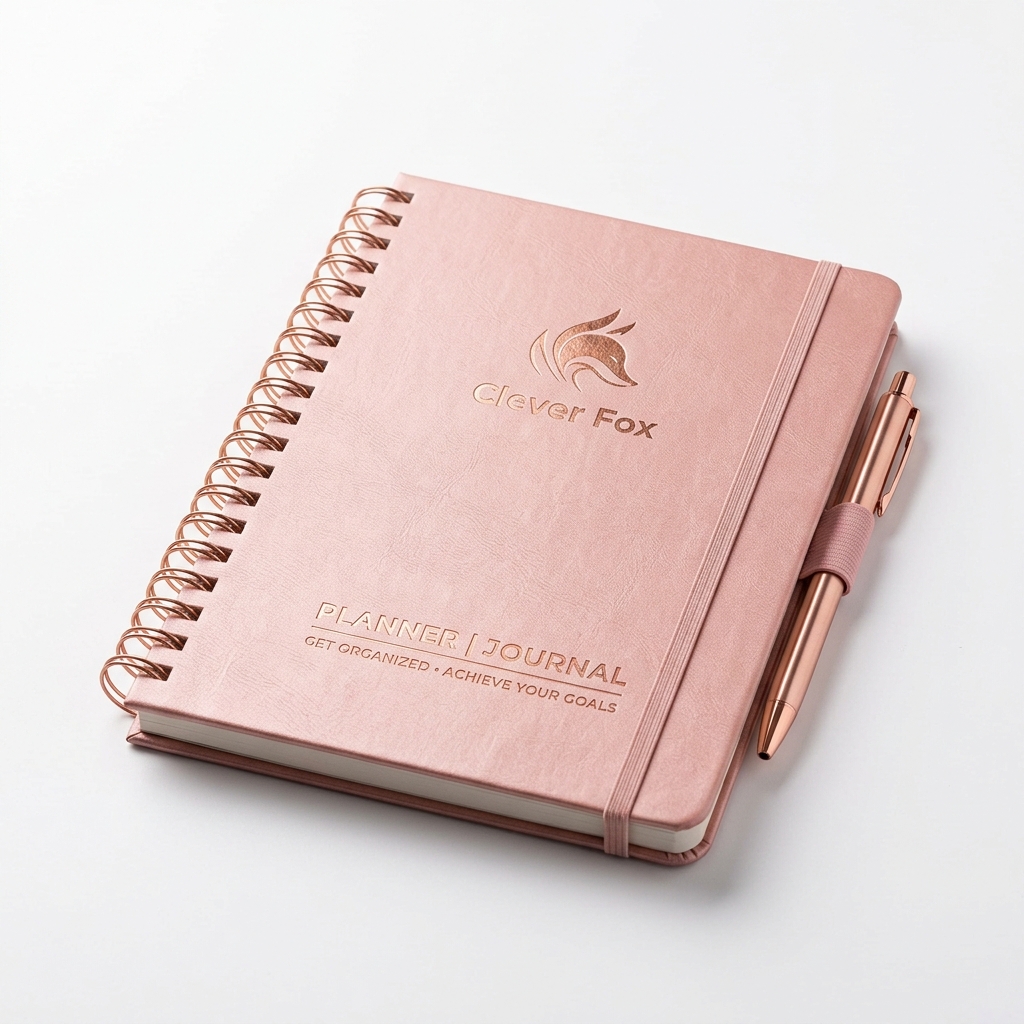
Clever Fox Habit Tracker Journal
If you prefer pen-and-paper tracking alongside your app, this journal gives you a tangible visual of your streaks.
$12.99
Check Price on Amazon →There's something about physically filling in a box with a pen that a phone screen can't replicate. For my first 30-day challenge, the Clever Fox journal sat on my nightstand, and coloring in that day's box became the satisfying final step of my evening routine. Once I had the habit locked in, I transitioned to digital tracking. But for getting started? Paper wins.
Real People, Real Timelines
The research gives us averages, but averages don't capture what this actually feels like. Here's what I've heard from people who've gone through it:
"I tried to make running a habit three times before it stuck. The first two times I gave up after 21 days because I still hated it and figured something was wrong with me. The third time, I committed to 10 weeks and stopped judging the process. By week 8, I caught myself lacing up my shoes without thinking about it. Knowing the real timeline saved me."
"Meditation took me about 40 days to feel automatic. But journaling? Still feels like effort after 90 days, even though I do it every morning. The idea that every habit has the same timeline is just wrong. I stopped comparing and started accepting that each behavior has its own pace."
"The 'never miss twice' rule changed everything. I used to have one bad day and spiral into a week off. Now I know that one miss is just noise. Two misses is the start of a new pattern. That reframe was worth more than any app or planner I've bought."
Your Next Step: The First 30 Days
Here's what I'd tell myself if I could go back to before I understood any of this:
- Pick one habit. Just one. Not five. Not three. One. Make it specific and small enough that you could do it on your worst day.
- Commit to 30 days. Not "forever." Not "until it sticks." Thirty days. That's your container. At the end, you'll decide whether to extend.
- Anchor it to something you already do. "After I [existing habit], I will [new habit]." This is habit stacking, and it removes the need to remember.
- Track it visibly. Calendar on the wall, journal on the nightstand, app on your home screen. Make your streak something you see every day.
- Expect the dip. Days 8-14 will be hard. That's normal. That's the resistance. Push through it knowing it's temporary, not a sign that you picked the wrong habit.
If you've been burned by the 21-day myth, you're in good company. The real timeline is longer, messier, and more variable than any motivational poster suggests. But that's actually good news. It means you weren't failing before. You were just working with the wrong map.
Start with 30 days. Track your progress. Let the science work for you instead of against you.
If you want the full framework for structuring your first challenge, read The PixMixy Method: 30 Days to Transform Your Daily Routine. And if you're coming to this from a place of exhaustion and overwhelm, I wrote about my own experience in From Burnout to Balance: A Developer's 30-Day Reset.
The chain starts with one link. Make today that link.
