I Was Bleeding $7,320 a Year Without Knowing It
Last January, I sat down with a cup of coffee and a bank statement I'd been ignoring for months. Three hours later, I had a number that made my stomach drop: $7,320 per year in spending I couldn't account for. Not bills. Not rent. Not groceries. Pure waste - subscriptions I forgot about, $6 coffees that "didn't count," and an embarrassing amount of 2 AM Amazon purchases I barely remembered making.
The scariest part? I considered myself financially responsible. I had a budget. I checked my bank app occasionally. I "kept an eye on things." But keeping an eye on things and actually tracking expenses daily are two completely different activities. One gives you a vague sense of control. The other gives you the truth.
That's when I started a simple practice: 5 minutes a day, every morning, reviewing and logging my expenses. What happened over the next 90 days changed my entire financial trajectory. Here's exactly how to track expenses daily using the system that saved me thousands.
Why Invisible Spending Kills Every Budget
There's a psychological phenomenon researchers call the "nickel and dime effect." Small purchases feel weightless in isolation. A $4.50 latte. A $2.99 app subscription. A $12 impulse buy at checkout. Your brain processes each one as trivial, barely worth noticing. But stack those trivial expenses across 30 days? You're looking at hundreds - sometimes thousands - of dollars you never consciously chose to spend.
Subscription creep is the worst offender. A 2024 study by C+R Research found that the average American spends $219 per month on subscriptions but estimates they spend only $86. That's a $133/month gap between perception and reality. Over a year, that gap alone costs you $1,596.
Then there are micro-purchases: the app store game upgrade, the convenience-store snack, the "just this once" Uber instead of taking the bus. Individually insignificant. Collectively devastating. I had 11 active subscriptions when I started tracking. I was using 4 of them.
The Awareness Gap: What the Data Says
Here's a number that should make you uncomfortable. According to research from the National Endowment for Financial Education, people who track expenses daily spend 15-20% less than those who review finances monthly. Not because they're more disciplined. Because they're more aware. Awareness changes behavior before willpower even enters the equation.
Think about it this way: if you step on a scale every morning, you unconsciously make different food choices throughout the day. The same principle applies to money. When you know you'll log that $18 lunch in your tracker, you pause. You consider whether the salad from home might be the better call. That 3-second pause is where financial discipline actually lives.
The 5-Minute Daily Check-In: Exactly What to Do
Every morning, right after my first sip of coffee, I open PixMixy and spend exactly 5 minutes on my finances. Not 20. Not 45. Five. Here's the step-by-step:
- Log yesterday's expenses (2 minutes). Open your banking app or receipts. Enter every transaction from the previous day into PixMixy's finance tracker. Amount, category, one-word note. That's it.
- Log any income (30 seconds). Freelance payment? Refund? Side hustle earnings? Get it in the tracker so your net picture stays accurate.
- Check your daily net (30 seconds). Did you come in positive or negative yesterday? How does it compare to your target? This single number tells you everything.
- Scan for anomalies (1 minute). Any charges you don't recognize? Any subscription renewals that hit? Catch problems the day they appear, not 30 days later.
- Set a spending intention (1 minute). Look at today's calendar. Do you have lunch plans? A meeting downtown? Pre-decide what you'll spend today and write it down.
That's the entire system. Five minutes. Coffee in hand. No spreadsheets, no complex formulas. Just honest daily contact with your money.

My 5-minute morning check-in - coffee and expense logging
Categorizing Expenses Without Overcomplicating It
The fastest way to kill a tracking habit is creating 25 expense categories. I tried this early on. I had "Transportation - rideshare," "Transportation - gas," "Transportation - parking," and "Transportation - tolls." By day 3, I was spending more time categorizing than tracking. The system collapsed.
Now I use 5 categories. Just 5:
- Essentials: Rent, utilities, groceries, insurance, transport to work
- Food Out: Restaurants, coffee shops, delivery, bars
- Growth: Books, courses, gym, health, tools for work
- Fun: Entertainment, hobbies, going out, gifts
- Recurring: All subscriptions and memberships in one bucket
Every expense fits into one of these. Don't overthink the edges. A work lunch? "Food Out." A Spotify renewal? "Recurring." Speed matters more than precision when you're building the habit. You can always refine categories later - but only if you're still tracking. And you'll only still be tracking if the system is fast.
"Do not save what is left after spending, but spend what is left after saving." - Warren Buffett
The Weekly Review: 15 Minutes Every Sunday
Daily tracking gives you awareness. The weekly review gives you insight. Every Sunday evening, I spend 15 minutes looking at my PixMixy weekly dashboard. Here's what I examine:
- Total spending by category: Which category took the biggest bite? Was it justified?
- Daily average: My target is $38/day in discretionary spending. Did I hit it?
- Highest single expense: Was it planned or impulsive? Could I have avoided it?
- Week-over-week trend: Am I spending more or less than last week? Why?
The weekly review is where patterns become visible. After three weeks, I spotted something surprising: my spending spiked every Thursday. Why? That's when my team goes out for lunch. A $22 meal plus drinks added up to $88/month on one recurring social obligation. I didn't cut it entirely - I started ordering water instead of cocktails and saved $40/month without anyone noticing.
Monthly Review: Finding the Patterns That Matter
Once a month, usually the first Sunday, I zoom out. The monthly review takes 20-30 minutes and answers bigger questions:
- Net savings rate: What percentage of my income did I keep? My target is 25%.
- Subscription audit: Did I use every subscription this month? If not, cancel it.
- Category trends: Is "Food Out" creeping up? Is "Growth" shrinking?
- Income vs. expenses trend: Is the gap widening (good) or narrowing (problem)?
This is also when I update my financial goals. After 3 months of tracking, I realized my "Food Out" category was averaging $380/month. I set a goal to bring it to $250. Within 6 weeks, I hit $230 - not through deprivation, but through awareness. I started batch-cooking on Sundays and bringing lunch to work 4 days instead of 2. The savings were $150/month, or $1,800/year.

The Psychology of Money by Morgan Housel
This book reframed how I think about spending and wealth. Housel's core argument is that financial success is about behavior,
$15.69
Check Price on Amazon →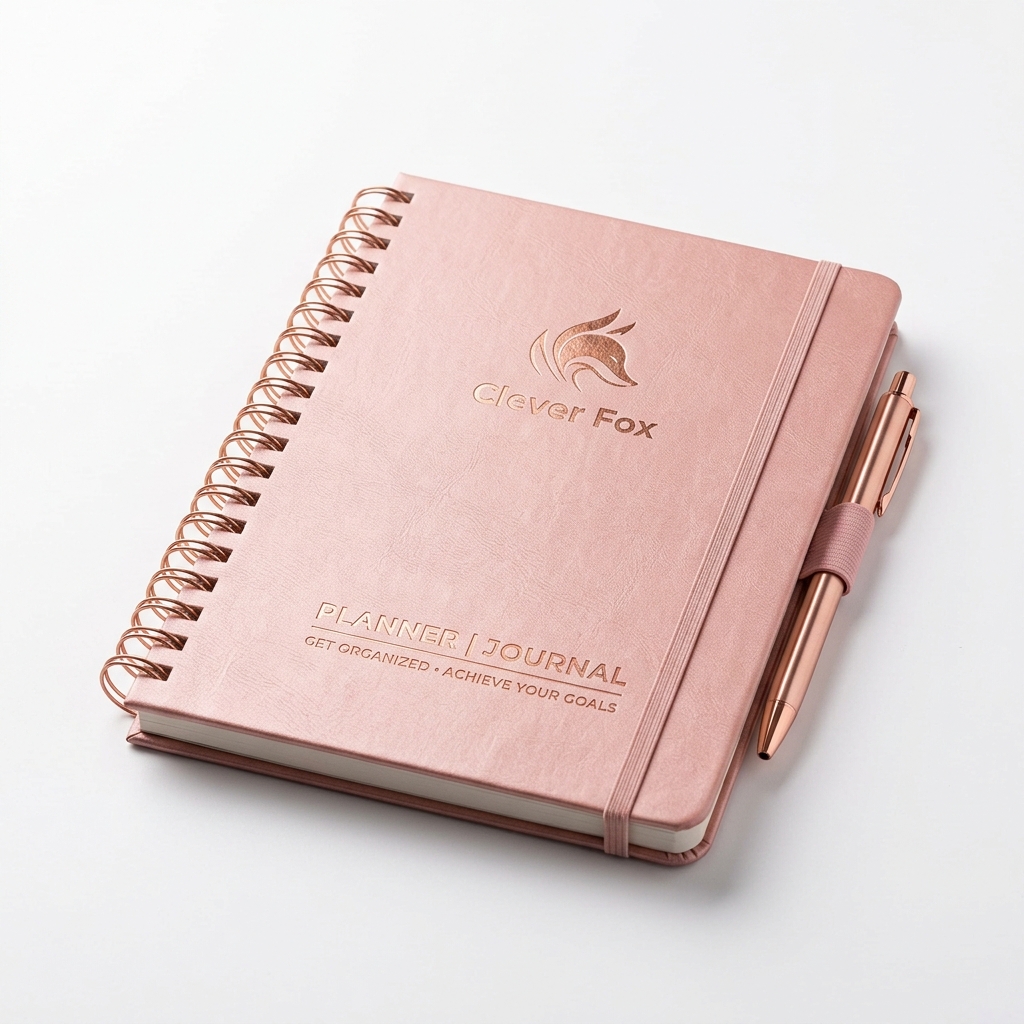
Clever Fox Budget Planner - Monthly Financial Organizer
I use this physical planner alongside PixMixy for monthly goal-setting and big-picture planning.
$25.99
Check Price on Amazon →"I started the 5-minute morning check-in after reading this blog and within 3 weeks I found $240/month in subscriptions and micro-purchases I'd completely forgotten about. The daily habit took less effort than brushing my teeth, and it's saved me more than $2,800 this year."
"My partner and I both started tracking in PixMixy at the same time. We discovered we were spending $520/month on food delivery between us. We cut it to $120 and put the difference toward a vacation fund. We're going to Portugal in October - paid for entirely by money we used to waste on delivery fees."
"The weekly Sunday review is what made everything click. I could see in black and white that Fridays were costing me $85 on average. Once I saw that number, I couldn't unsee it. Now Fridays average $30 and I don't feel like I'm missing out on anything."
"A budget is telling your money where to go instead of wondering where it went." - Dave Ramsey
Your 5-Minute Habit Starts Now
Financial transformation doesn't require a raise, a windfall, or a finance degree. It requires 5 minutes every morning and the honesty to look at your numbers. The people who track daily spend less, save more, and stress less about money. That's not opinion - that's what the data shows, over and over.
Open PixMixy's finance tracker. Log your last 3 expenses. Set a reminder for tomorrow morning. That's the whole starting point. If you want to go deeper, check out how daily tracking builds lasting financial discipline and read the full story of how I paid off $5,000 in debt using this exact system.
Five minutes a day. That's all it takes to stop wondering where your money goes and start telling it where to go.
