My Mornings Were a Disaster (Until I Found a System)
I'm going to be honest with you: two years ago, my mornings looked like a slow-motion car crash. I'd wake up 40 minutes before I had to leave, scroll my phone in bed until panic set in, then scramble through a routine that was really just controlled chaos. Some days I'd forget to eat. Other days I'd show up to work with my shirt inside out. Once, I drove halfway to the office before realizing I'd left my laptop on the kitchen counter.
The strangest part? I knew mornings mattered. I'd read the articles. I'd bookmarked the YouTube videos. I even bought a sunrise alarm clock that sat in its box for three months. Knowledge wasn't the problem. I didn't have a system.
Then I started tracking. Not just "trying" to wake up earlier or "wanting" to meditate. I mean actually logging every morning habit in PixMixy and reviewing the data weekly. Within 30 days, my mornings went from my weakest point to the strongest part of my day. Here's exactly how that happened, and why the science says it should work for you too.
Why Routines Beat Willpower Every Time
Most people try to fix their mornings with motivation. They watch a pump-up video, set their alarm for 5 AM, and white-knuckle their way through Day 1. By Day 4, they're back to snoozing.
The research explains why. Roy Baumeister's ego depletion studies at Florida State University demonstrated that willpower operates like a muscle with limited fuel. In his landmark experiments, participants who had to resist temptation (like ignoring freshly baked cookies) performed significantly worse on subsequent tasks requiring self-control. Their willpower tank had been drained.
Here's the critical insight for morning routines: routines bypass willpower entirely. When a behavior becomes automatic, it shifts from the prefrontal cortex (effortful decision-making) to the basal ganglia (habit execution). You stop asking yourself "Should I get up?" and simply get up. The same way you don't debate whether to brush your teeth. It just happens.
Baumeister's later work with Tierney, published in Willpower: Rediscovering the Greatest Human Strength, reinforced this: people with the best self-control aren't the ones who resist temptation most. They're the ones who structure their environment so they rarely need to resist. A morning routine is exactly that kind of structure.
Three Sample Routines for Different Time Budgets
The number one reason morning routines fail is that people copy a 3-hour routine from a CEO who has a personal chef and no commute. Your routine has to fit your life. I've built three versions based on the time you actually have.
The 30-Minute Routine (Realistic Start)
Perfect if you're just getting started or have an early commute. This is the routine I used for my first two weeks:
- Wake up + make bed (2 min)
- Glass of water (1 min)
- 5-minute stretch or walk (5 min)
- Shower (7 min)
- Write 3 priorities for the day (5 min)
- Healthy breakfast (10 min)
That's it. No meditation marathons. No ice baths. Just six actions that set the tone without requiring a 4:30 AM alarm.
The 60-Minute Routine (Sweet Spot)
This is where most people land after a month of consistency. It's my current daily routine:
- Wake up + make bed (2 min)
- Hydrate + supplements (2 min)
- Movement: walk, bodyweight workout, or yoga (20 min)
- Cold shower (3 min)
- Journal: 3 priorities + gratitude (8 min)
- High-protein breakfast (10 min)
- Read or learn something (15 min)
The 60-minute version adds movement and learning, the two habits that produce the most noticeable impact on energy and focus throughout the day.
The 90-Minute Routine (Full Protocol)
For days when you have the time, or once your routine is locked in and you want to go deeper:
- Wake up + make bed (2 min)
- Hydrate + supplements (2 min)
- Meditation or breathwork (10 min)
- Exercise: run, gym, or intense bodyweight (30 min)
- Cold shower (3 min)
- Journal + daily planning in PixMixy (10 min)
- High-protein breakfast (10 min)
- Deep work block (23 min)
The 90-minute version front-loads your hardest cognitive work before the world starts demanding your attention. The deep work block here is short but powerful. When your mind is fresh and you've already exercised, even 20 minutes of focused work outperforms two hours of afternoon distraction.
How to Stack Habits Into Your Morning
James Clear popularized the concept of habit stacking in Atomic Habits, and it's the single most effective technique I've used to build my morning routine. The formula is simple:
"After I [CURRENT HABIT], I will [NEW HABIT]."
Instead of relying on motivation to remember each step, you chain them together. Each completed habit becomes the trigger for the next one. Here's how my stack looks:
- After my alarm goes off, I immediately make my bed
- After I make my bed, I drink a glass of water
- After I drink water, I put on workout clothes
- After I finish exercising, I take a cold shower
- After my shower, I open my journal
The beauty is that you never have to think about what comes next. The previous action is the cue. After about two weeks of consistent practice, the entire chain becomes a single automated sequence. Your brain stops treating each step as a separate decision.
If you want a deeper breakdown of how to apply this technique across your entire day, check out our full guide on habit stacking examples.
Tracking Adherence: The Key Nobody Talks About
Here's what separates people who build lasting morning routines from people who quit after two weeks: measurement.
Everyone talks about what to put in your routine. Almost nobody talks about tracking whether you actually do it. And that gap is where most routines go to die.
I track every element of my morning routine as individual habits in PixMixy. Not a single checkbox for "did morning routine." Each component gets its own line: hydration, exercise, journaling, cold shower, reading. Here's why that granularity matters:
- It exposes your weak links. After my first month of tracking, I had 95% adherence on making my bed and hydrating, but only 42% on meditation. That data told me meditation was positioned wrong in my routine (I was trying to do it when I was still half-asleep). I moved it to after exercise, and adherence jumped to 80%.
- It creates accountability without a coach. When you see a 14-day streak on your cold shower habit, the psychological cost of breaking it becomes real. That streak becomes an asset you protect.
- It reveals the compound effect. My weekly completion rate went from 51% in Week 1 to 88% in Week 6. I couldn't have felt that gradual improvement without data. But seeing the numbers climb gave me proof that the system was working.
The research backs this up. A 2015 study published in the British Journal of Health Psychology found that people who tracked their habits daily were 42% more likely to maintain them long-term compared to those who relied on memory alone. Tracking isn't optional. It's the mechanism that converts intention into identity.

My morning meditation spot - the foundation of a science-backed routine
Tools That Make It Stick
Your routine is only as strong as the environment you build around it. These two tools have been non-negotiable in my morning system.
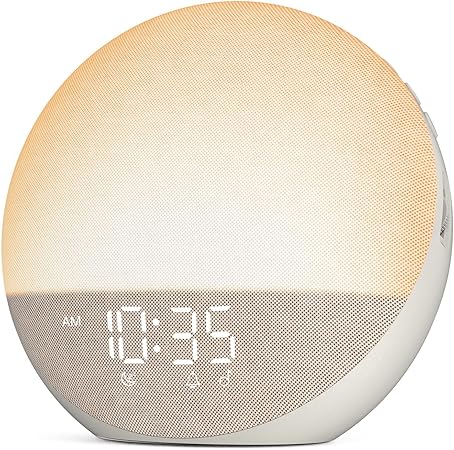
Hatch Restore 2 Sunrise Alarm Clock
I resisted buying this for months because I thought a $87 alarm clock was ridiculous. I was wrong.
$87.00
Check Price on Amazon →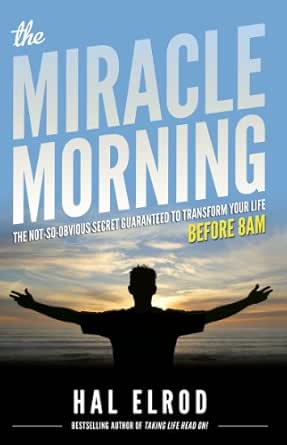
The Miracle Morning by Hal Elrod
This book gave me the framework I was missing. Elrod's S.A.V.E.R.S. method (Silence, Affirmations, Visualization, Exercise, Reading,
$13.99
Check Price on Amazon →"I tried building a morning routine six different times before PixMixy. The difference was tracking. When I could see that I was hitting 90% on exercise but only 30% on reading, I realized I needed to swap their positions. That one adjustment made the whole routine stick. Four months in and I haven't missed a morning."
"I'm a nurse with rotating shifts. I thought morning routines were impossible for me. But the 30-minute version works even on early shift days. I track it in PixMixy and my completion rate is 82% over the last 6 weeks. My stress levels have dropped noticeably and I actually eat breakfast now."
"The habit stacking concept changed everything for me. I used to treat each morning habit as a separate decision. Now it's one chain reaction. Wake up, bed made, water, shoes on, out the door. My PixMixy data shows I went from 45% morning completion to 91% in five weeks."
"We are what we repeatedly do. Excellence, then, is not an act, but a habit." - Will Durant (often attributed to Aristotle)
Your Morning Starts Tonight
The best morning routines don't start when the alarm goes off. They start the night before. Lay out your workout clothes. Set your Hatch alarm. Fill a water glass. Write tomorrow's three priorities. When you remove friction from the equation, you remove excuses.
Start with the 30-minute routine. Track every element in PixMixy for two weeks. Let the data tell you what to adjust. If you're hitting 85%+ consistency, add one element. Below 70%? Simplify. This isn't about perfection. It's about building a system that survives bad days, busy weeks, and low motivation.
If you want to understand why mornings are the highest-leverage point of your entire day, read our deep dive on why morning routines are the key to success. And for a practical guide on chaining habits together beyond just mornings, explore our habit stacking examples.
Your routine doesn't have to be extraordinary. It has to be consistent. And consistency starts with a single tracked morning. Open PixMixy, log today, and let the data build your momentum.
