I Was Studying 6 Hours a Day and Failing Every Test
Let me paint the picture. Sophomore year. I was sitting in the library from 7 AM to 1 PM almost every single day. Six hours of reading, highlighting, and re-reading. My notebooks were full. My highlighters were dry. And when exam day came? I'd stare at the questions and feel that horrible, sinking realization: I don't actually know any of this.
My GPA dropped to a 2.3. I was exhausted, frustrated, and genuinely starting to wonder if I just wasn't "smart enough" for college. Turns out, intelligence wasn't the problem. My study technique was. I was putting in hours without any strategy, like running on a treadmill and wondering why I never got anywhere. Once I discovered the best study techniques backed by cognitive science, everything shifted. I cut my study time nearly in half and my grades climbed higher than they'd ever been.
Active Recall: The Technique That Changed Everything
The single biggest shift I made was switching from passive review to active recall. Instead of re-reading my notes for the fifth time, I started closing the textbook and forcing myself to write down everything I could remember. Then I'd check what I missed.
This felt awful at first. I'm being honest here: the first time I tried it, I could barely recall 30% of what I'd just read. My ego was bruised. But that discomfort? That's the learning happening.
A 2011 study by Karpicke and Blunt, published in Science, found that students who used retrieval practice (active recall) retained 50% more information after one week than students who used concept mapping or repeated reading. 50%. Not a marginal difference. A massive one. The researchers gave students a passage to study and then tested them a week later. The active recall group didn't just remember more facts; they showed deeper conceptual understanding too.
Here's how I apply it now: after every study session, I spend the last 10 minutes with a blank sheet of paper. No notes, no textbook. Just me and the question: "What did I just learn?" I write until I can't think of anything else. Then I open the material and fill in the gaps. Those gaps become my priority for the next session.
Spaced Repetition: Working With Your Brain, Not Against It
The second technique that transformed my studying was spaced repetition, and it starts with a guy named Hermann Ebbinghaus. Back in 1885, Ebbinghaus ran experiments on himself (as you did in the 1800s) and discovered what we now call the forgetting curve. His research showed that we forget roughly 70% of new information within 24 hours if we don't review it. Within a week, that number climbs to about 90%.
That means all those marathon study sessions I was doing? Most of that information was gone by the time I walked to my car.
Spaced repetition fights the forgetting curve by scheduling reviews at increasing intervals. You review material after 1 day, then 3 days, then 7 days, then 14 days. Each review strengthens the memory, and the intervals get longer because the memory gets more durable.
I started using Anki for flashcards and tracked my daily review count in PixMixy's study tracker. The first month was brutal because I had a growing pile of cards to review. But by month two, the daily reviews dropped significantly because I was actually remembering things. My exam prep time shrunk from 3 weeks to about 10 days because I wasn't starting from scratch every time.
The Pomodoro Technique: 25 Minutes That Beat 3 Hours
Knowing what to study is one thing. Actually sitting down and doing it with focus is something else entirely. That's where the Pomodoro Technique comes in, and it's embarrassingly simple: work for 25 minutes, break for 5. After four rounds, take a longer break of 15 to 20 minutes.
I used to study in these vague, multi-hour blocks. "I'll study from 2 to 6 PM." What actually happened during those 4 hours? Maybe 90 minutes of real work, scattered between checking my phone, getting snacks, scrolling Instagram, and staring at the wall. I was "studying" but I wasn't learning.
When I started tracking my Pomodoro sessions in PixMixy, the numbers told a brutal truth. During my first week, I completed an average of 6 Pomodoros per day out of my planned 10. That's 150 minutes of actual focus out of the 4 to 5 hours I was "spending" studying. By week three, I was hitting 9 to 10 Pomodoros consistently because the timer created urgency and the short breaks prevented burnout.
The key is treating each 25-minute block as sacred. Phone goes on airplane mode. Browser tabs closed. One subject, one task. When you know you only have 25 minutes, you stop messing around and start actually working.
Building a Study Session Habit (and Why Tracking Hours Matters)
Here's something nobody talks about: studying is a habit, not just an activity. And like any habit, it needs a trigger, a routine, and a reward. I learned this the hard way by trying to "just study more" without any system.
What actually worked was building a study ritual. Every day at 8 AM, I sat at the same desk, opened PixMixy, started my first Pomodoro, and logged the session. The trigger was the time and location. The routine was the Pomodoro cycle. The reward was watching my tracked hours accumulate in PixMixy's weekly view.
Tracking my study hours revealed patterns I never would have noticed otherwise:
- My peak focus window was 8 AM to 11:30 AM. After lunch, my recall accuracy dropped by about 25%.
- I was most productive on Tuesdays and Wednesdays, and weakest on Mondays (recovering from weekend habits).
- Sessions longer than 2.5 hours had diminishing returns. I was better off stopping and coming back fresh.
- My weekly average went from 14 unfocused hours to 18 focused hours with better results.
The data didn't lie. And once I could see the patterns, I could design my schedule around them instead of fighting my own biology. If you're serious about building a study habit from the ground up, I wrote a whole post about building self-discipline when motivation runs dry that pairs perfectly with what I'm describing here.

Active recall, spaced repetition, and Pomodoro - the three pillars of effective studying
Combining All Three: My Daily Study Protocol
These techniques don't live in isolation. The magic happens when you stack them together into a single system. Here's exactly what my study day looks like now:
- Morning review (20 min): Open Anki and do my spaced repetition flashcard reviews. This clears the daily queue and reinforces older material before I learn anything new.
- Deep study block (3 Pomodoros, ~90 min): New material. I read or watch lectures, then close everything and do active recall on a blank page. I note what I couldn't remember.
- Mid-day break (60-90 min): Lunch, walk, or exercise. No studying.
- Afternoon block (3 Pomodoros, ~90 min): Practice problems and application. This is where I test myself with real exam-style questions.
- End-of-day card creation (15 min): Turn today's gaps (from active recall) into new Anki flashcards. These enter the spaced repetition cycle automatically.
- Log in PixMixy: Total Pomodoros completed, subjects covered, focus rating, and any notes.
Total study time: about 4 hours of actual focused work. That's it. Compare that to the 6 or 7 hours of unfocused chaos I was doing before. Less time, dramatically better results.
The Tools That Made the Difference
Your study environment matters more than you'd think. Two investments made a measurable difference in my focus and endurance:

Sony WH-1000XM5 Noise-Cancelling Headphones
I study in coffee shops and libraries, and both have one problem: noise. People talking, keyboards clacking, espresso machines screaming.
$278.00
Check Price on Amazon →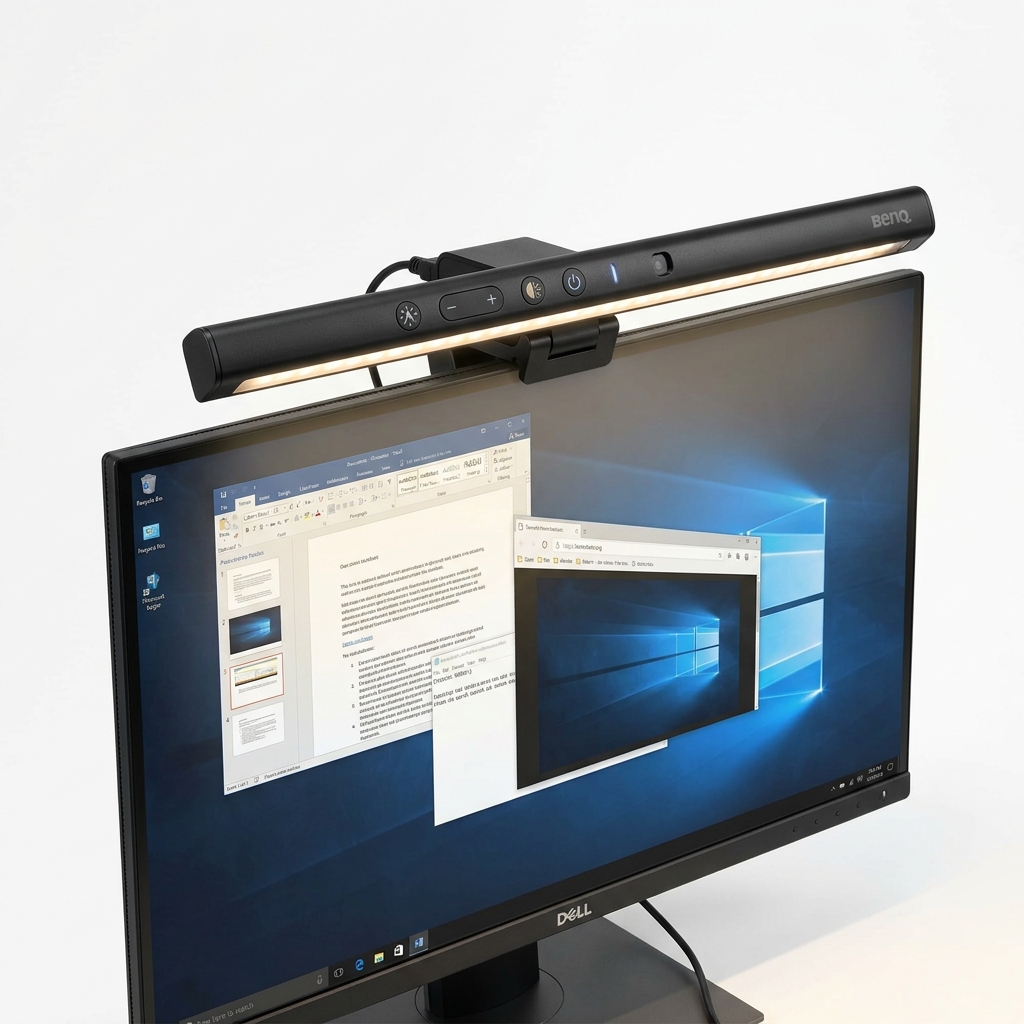
BenQ ScreenBar Monitor Light
Eye strain was cutting my study sessions short. I'd get headaches after 2 hours of screen time, especially studying at night.
$50.00
Check Price on Amazon →What Other Students Are Saying
"I switched from re-reading to active recall after reading this blog. My first exam using the new method: 89%. Previous average: 72%. I literally texted my mom. Three Pomodoros of active recall beat 5 hours of highlighting."
"Tracking my study hours in PixMixy showed me I was only truly focused for 2 out of every 5 hours. Once I started doing real Pomodoros and logging them, I passed my CPA exam on the first try. The data kept me honest."
"Spaced repetition felt like overkill until I stopped forgetting everything two days after learning it. I use Anki plus PixMixy tracking and my retention has never been better. Wish I'd found this system in undergrad."
Stop Studying Harder. Start Studying Smarter.
The best study techniques aren't complicated. Active recall forces your brain to retrieve information, which strengthens memory. Spaced repetition times your reviews so you catch material right before you'd forget it. The Pomodoro Technique keeps you focused and prevents the kind of multi-hour marathon sessions that feel productive but aren't.
Stack all three together, track your sessions in PixMixy, and watch the data tell you exactly where to improve. I went from a 2.3 GPA to Dean's List using these exact methods. Not because I'm smarter than anyone else, but because I stopped confusing time spent with learning done.
If you want to see the full system I built during my toughest academic year, check out the study system that got me through medical school. And if the real problem isn't your technique but your consistency, start with how to build self-discipline when motivation disappears.
Your future GPA will thank you.
