You Can Build Real Muscle at Home. Here Is What Actually Matters.
Let us kill the biggest myth first: you do not need a commercial gym, machines, or a wall of chrome to build a genuinely strong, muscular body. Your muscles cannot tell the difference between a $4,000 leg press and a pair of adjustable dumbbells in your bedroom. All they respond to are three things: progressive tension, enough protein, and enough recovery. Give them those and they grow. Everything else is marketing.
What a gym gives you is not magic — it is options and a bit of social accountability. This guide shows you how to replicate the parts that matter at home, as a beginner, without wasting money or spinning your wheels for six months. The good news for beginners is real: your first year is when muscle comes fastest and easiest. Do not waste it.
The Only Three Principles That Grow Muscle
1. Progressive overload (the one non-negotiable)
Muscle grows when you ask it to do slightly more than last time — more weight, more reps, or better control. This is the entire game. If you do the same push-ups with the same reps for a year, your body has zero reason to change. At home, you drive overload by adding reps, slowing the tempo, shortening rest, or — the cleanest lever — adding weight with adjustable dumbbells. If you are not tracking your numbers, you are not progressively overloading; you are just moving around. This is why measurement matters as much in fitness as it does in tracking progress beyond the scale.
2. Enough protein
You cannot build a wall without bricks. Aim for roughly 0.7 to 1 gram of protein per pound of bodyweight per day. For most guys that means being deliberate — protein does not happen by accident on a normal diet. Anchor each meal around a protein source and the number takes care of itself.
3. Enough recovery
Muscle is not built during the workout — it is built while you sleep and recover from it. Training a muscle hard every single day is a beginner mistake that stalls progress and invites injury. Hit each muscle group 2–3 times a week, sleep 7–9 hours, and let the growth happen on the off days.
Beginners overcomplicate the workout and ignore the two things that actually decide results: are you adding weight over time, and are you eating enough protein to support it?
The Beginner At-Home Plan (3 Days a Week)
You do not need six days or two-hour sessions. Three full-body workouts a week, 45 minutes each, will build more muscle for a beginner than an ambitious plan you abandon in three weeks. Sustainability beats optimization every time — the same lesson behind how long it really takes to build a habit.
The template (repeat 3x/week, e.g. Mon/Wed/Fri)
- Goblet squat or dumbbell squat — 3 sets of 8–12 (legs)
- Dumbbell floor press or push-ups — 3 sets of 8–12 (chest, triceps)
- One-arm dumbbell row — 3 sets of 8–12 per side (back, biceps)
- Romanian deadlift with dumbbells — 3 sets of 10–12 (hamstrings, glutes)
- Overhead press — 3 sets of 8–12 (shoulders)
- Dumbbell curl + overhead extension — 2 sets each (arms)
Every session, try to beat your last logged numbers by even one rep. Write it down — that logbook is your progressive overload. When 12 reps feels easy across all sets, increase the weight and drop back to 8. That loop, repeated for months, is how muscle is built.
The Minimal Gear That Actually Moves the Needle
You can start with bodyweight alone, but bodyweight has a ceiling — eventually push-ups get too easy and you have no way to add load. Three purchases cover 95% of a real home-gym result without a dedicated room or four figures spent. Skip everything else until you have used these for six months.
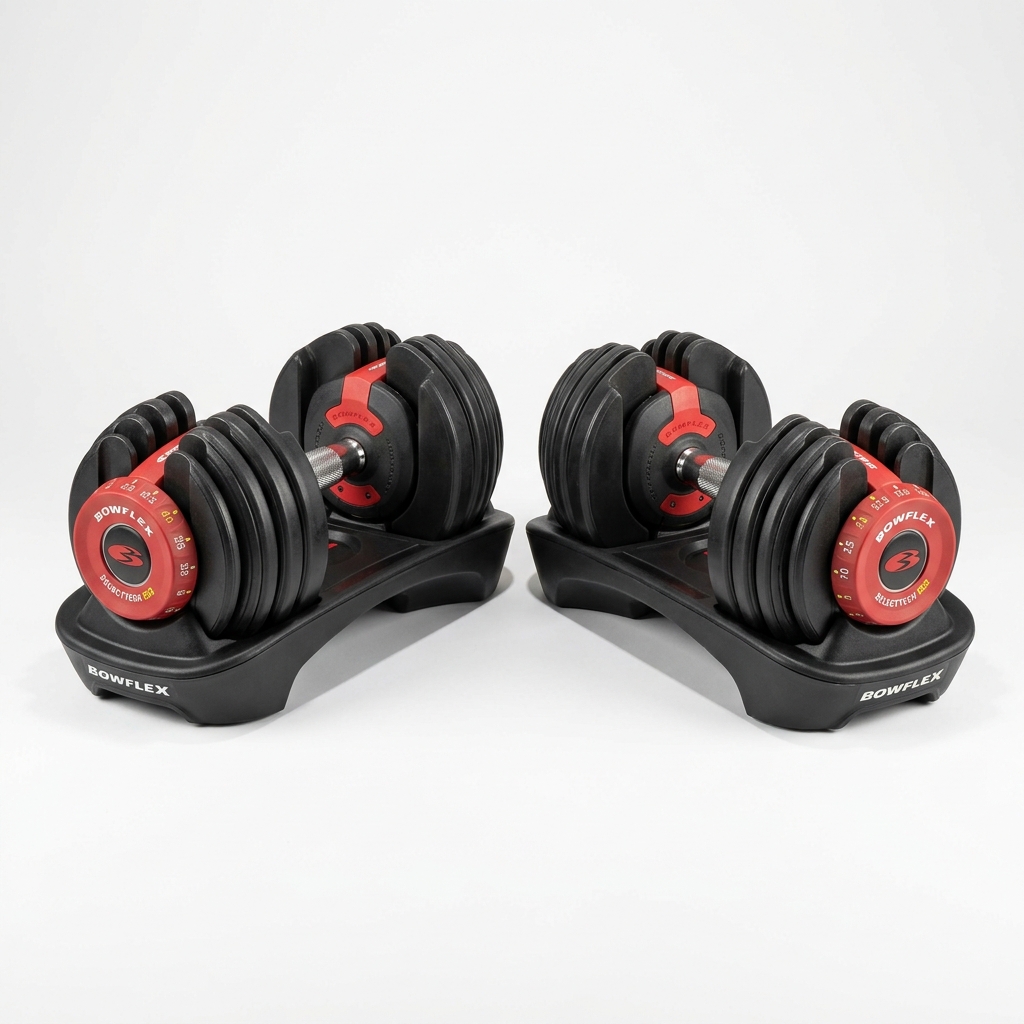
Bowflex SelectTech 552 Adjustable Dumbbells
This single pair replaces 15 sets of dumbbells and is the tool that makes progressive overload possible at home. Dial 5 to 52.5 lbs per hand in seconds — it is the entire plan above in one purchase, and it fits under a bed.
$259.00
Check Price on Amazon →
Optimum Nutrition Gold Standard 100% Whey
Hitting your daily protein number from whole food alone is hard with a busy schedule. One or two shakes closes the gap effortlessly — 24g of protein each, and it is the most tested, most trusted whey on the market.
$62.99
Check Price on Amazon →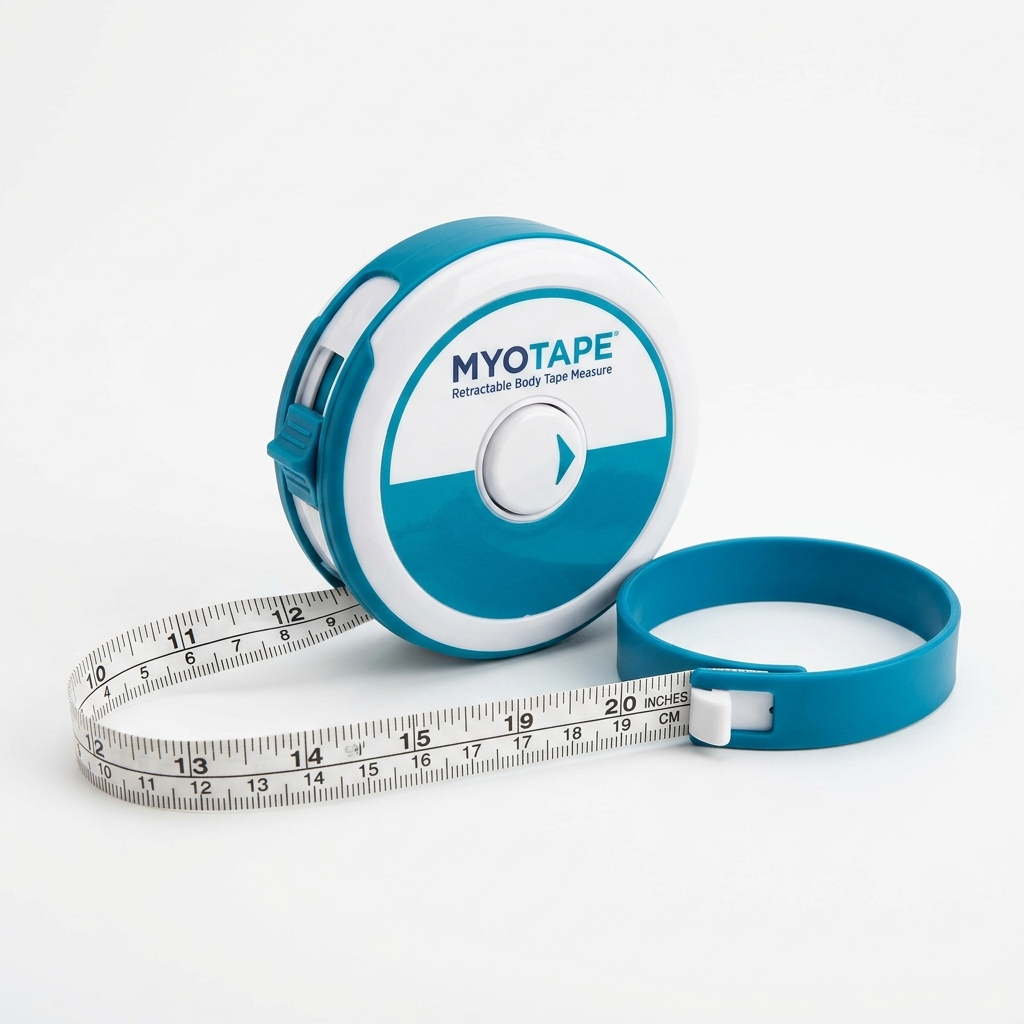
MyoTape Body Tape Measure
The scale lies when you are building muscle and losing fat at once. A tape measure on arms, chest, and waist shows the real progress the scale misses — the numbers that actually keep you training.
$8.95
Check Price on Amazon →"I wasted a year of gym memberships I barely used. Bought one pair of adjustable dumbbells, trained three mornings a week in my living room, and logged every set. Ten months later I'm up 18 pounds of muscle. The logbook was the whole difference — when you can see the weight going up, you show up."
Why Logging Every Session Is Non-Negotiable
Here is the trap that kills home training: with no coach and no gym around you, it is dangerously easy to do the same weights for the same reps, feel like you worked out, and wonder why nothing changes after three months. The fix is a log. Record every set, every weight, every rep in your PixMixy fitness tracker, and make progressive overload a number you can see. When you know last week was 3x10 at 30 lbs, beating it is obvious. When you are guessing, you are coasting. Tracking your body measurements alongside your lifts is the same discipline we cover in tracking fitness progress beyond the scale.
Train and Track From One Place
Your lifts, your protein, your body measurements, and your consistency streak all belong together. Log them in one app and the picture of your progress — the thing that keeps you going — finally comes into focus.
Log every set. Watch the muscle follow.
Track your workouts, protein, and measurements in PixMixy so progressive overload becomes a number you can see — and never miss a session with a streak that holds you accountable.
Start training with PixMixy → iOS, Android & Web · One subscription unlocks every featureThe Bottom Line
Building muscle at home is not a compromise — for a beginner it is often the better path, because it removes every excuse about commutes and crowds. Add weight over time, eat your protein, sleep, and log everything. Do that consistently for a year and you will not recognize the guy in the mirror. Start with your first three-day week this week.
